Exterior wood water repellents: what to check
Address water exposure while accounting for the existing finish.
Editorial team · 5 October 2026 · Practical guide
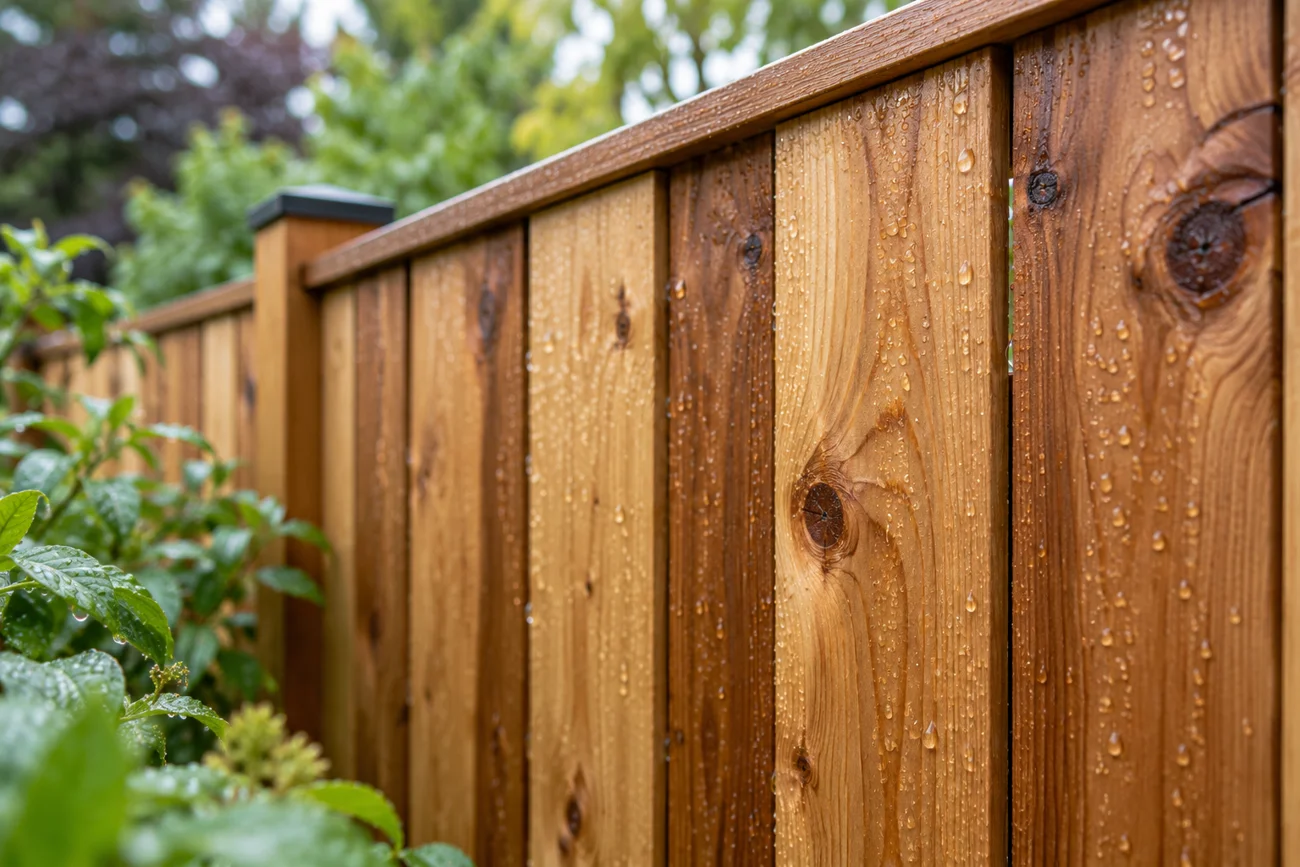
A substrate that changes with moisture
Exterior wood absorbs and releases moisture. A compatible treatment can reduce surface wetting, but cannot correct drainage, standing water or existing decay.
Check finish and appearance
Stain, paint or a previous treatment can alter absorption. Test an inconspicuous area for appearance and compatibility. Clear does not necessarily mean no colour or sheen change.
Maintain according to exposure
A deck exposed to foot traffic, snow and sun differs from a fence. UV, stain and wear resistance need separate evidence. Inspect exposed areas regularly.
Why water exposure deserves attention
On decks, fences and siding, wetting and drying cycles vary with exposure. A compatible water-repellent system aims to limit water contact or absorption; effectiveness depends on the system and wood. First correct water accumulation and maintain drainage.
New, pressure-treated or previously protected wood
Identify the species, condition and previous treatments. A sealed surface may prevent a new treatment from penetrating as intended. New wood may also need to reach the recommended moisture conditions. Request an assessment rather than assuming one clear product fits every deck.
Water repellent, stain or coating?
Choose according to your goal: preserve the wood appearance, change its colour or create a surface finish. Some products combine functions, but water and UV protection should be checked separately. A nano label does not replace a description of these functions.
Test a small area first
Cleaning, drying and a small-area trial help establish the finish. Check colour, sheen and behaviour after drying. On stairs and walking surfaces, also ask whether the system is intended for that use and how it affects slip behaviour.
Plan maintenance for the actual use
A sheltered area and a fully exposed deck do not age identically. Foot traffic, furniture and snow removal can add wear. Maintenance should reflect these factors and product instructions. Ask what findings justify reapplication instead of using the same schedule for every surface.
Frequently asked questions
Clear water repellent or stain: how do I choose?
Define the objective: reduce wetting, change colour or preserve appearance. Do not assume a clear water repellent provides the same UV protection as a pigmented finish. Check declared uses and maintenance instructions for each system.
Can previously stained wood be treated?
Check compatibility and penetration. An existing finish can prevent a new treatment from absorbing. Cleaning alone may be insufficient; finish removal may be required by the system.
This guide separates general principles from manufacturer claims. Product data submitted by Zinox was also reviewed. No independent comparative test results were provided.
Zinox — Manufacturer documentation; product-specific statements ↗Continue reading
Why clean before painting or protecting? ↗