Concrete and paver protection: penetrating or film-forming?
Choose by porosity, desired appearance and surface use.
Editorial team · 5 October 2026 · Practical guide
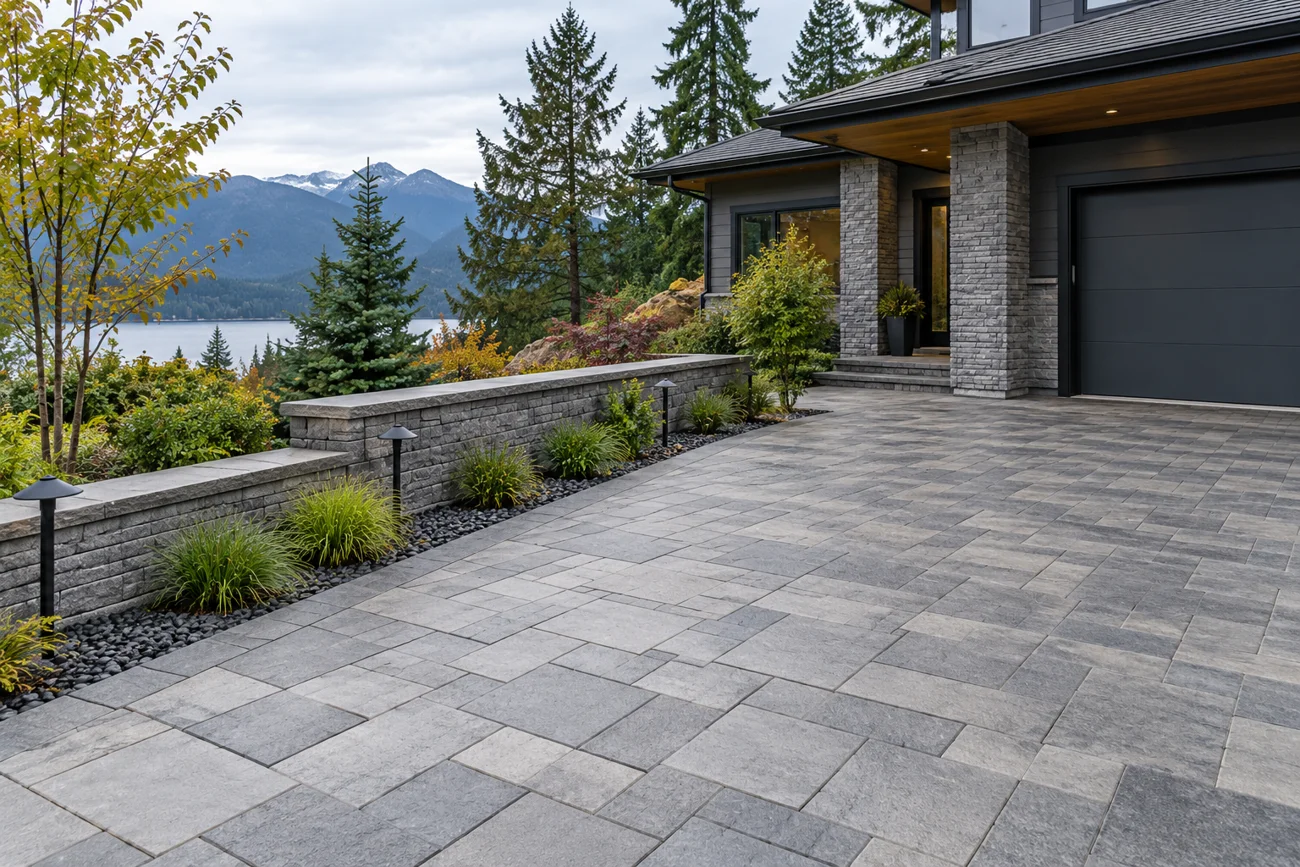
Two different approaches
A penetrating treatment acts within compatible substrate pores. A film-forming product creates a surface coating. Compare appearance, water-vapour behaviour and resistance to intended use.
Assess the substrate
Porosity, old sealers, moisture and contaminants affect results. A water repellent does not correct settled pavers, deficient joints or active cracks.
Water, oil and traffic
Water repellency does not establish oil resistance. Check slip behaviour and traffic durability for driveways and stairs. Absorption affects coverage; a site trial helps estimate quantities.
Why treat a mineral surface?
A compatible water repellent aims to limit water absorption in a porous substrate. For a driveway or patio, define the desired benefit: reduced wetting, a natural appearance or easier maintenance. Salt, oil and freeze resistance should be established by system data, not inferred solely from beading.
Concrete, stone and pavers are not interchangeable
Density, porosity and finishes vary. Concrete pavers, natural stone and polished slabs can require different products or preparation. Identify old sealers. Request a trial and compatibility confirmation for the exact material.
Preparation: address the underlying issue
Clean contamination as required by the system and verify drying. Oil stains, efflorescence or persistent moisture need appropriate assessment. Treatment does not level pavers or repair deficient drainage; address those problems before protection.
Natural appearance and wet-look finishes
A penetrating treatment and a film-forming sealer can produce different appearances. Compare dry trial areas rather than surfaces still wet after application. Check colour, sheen, slip behaviour and maintenance. More gloss is not proof of greater protection.
What belongs in a quote?
Specify material, preparation, selected treatment, quantities and coats. Ask how long pedestrians and vehicles must stay off the surface according to product instructions. The quote should also identify excluded areas and recommended maintenance.
Frequently asked questions
Water repellent and film-forming sealer: what differs?
An impregnation targets pores; a film-forming sealer creates a surface layer. Appearance, maintenance and compatibility with existing coatings can differ. Also compare intended foot or vehicle traffic and declared stain resistance.
Does a water repellent prevent every stain?
No. Water repellency and oil resistance are different properties. Request data for relevant contaminants. Clean spills promptly following manufacturer guidance and test the product in an inconspicuous area.
This guide separates general principles from manufacturer claims. Product data submitted by Zinox was also reviewed. No independent comparative test results were provided.
Sika Canada — Silane water repellents ↗Zinox — Manufacturer documentation; product-specific statements ↗Continue reading
Why clean before painting or protecting? ↗