What is an elastomeric roof coating?
Flexibility, thickness and adhesion: three concepts behind these coatings.
Editorial team · 5 October 2026 · Practical guide
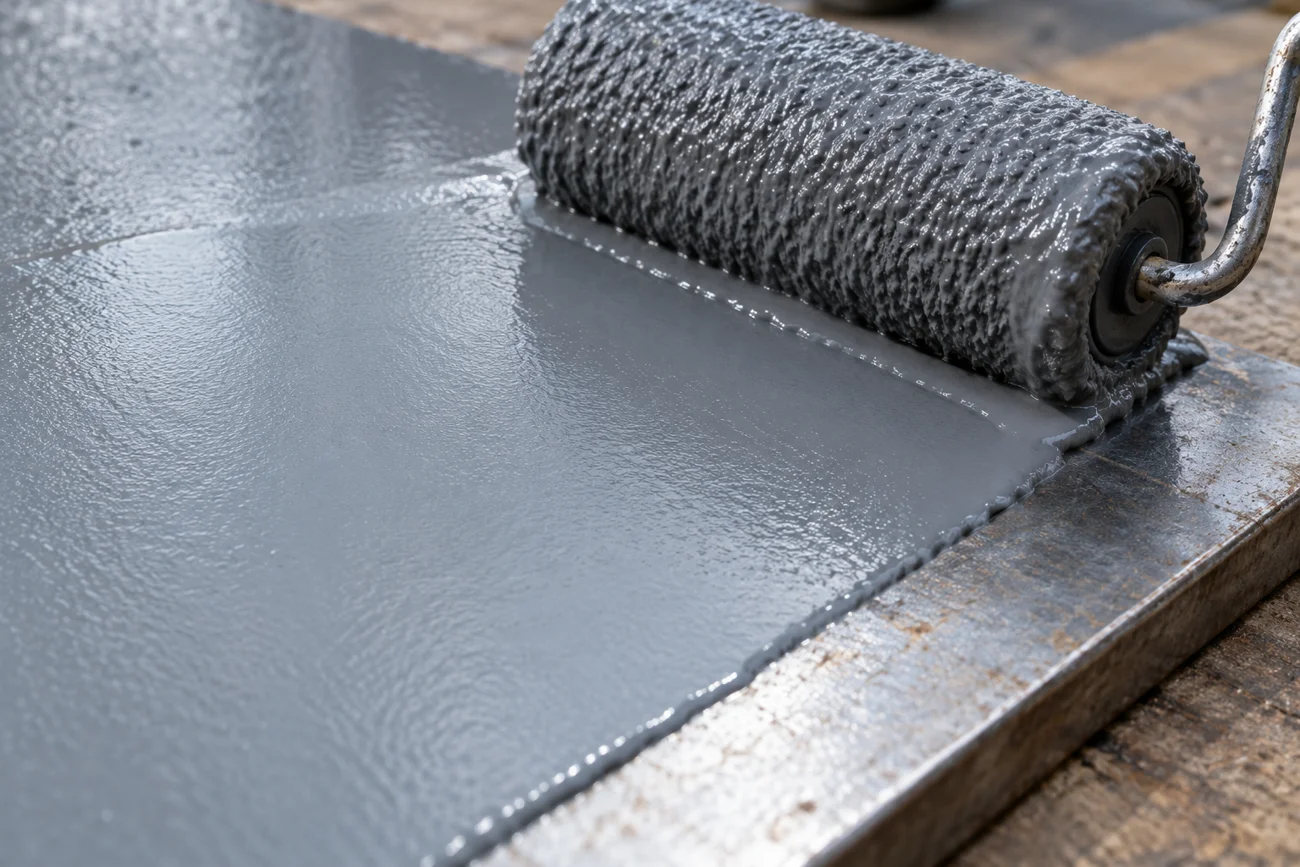
A film that stays flexible
Elastomeric describes the flexible behaviour of the film, not a single formula. Systems can use different binders. Elongation, adhesion and resistance must be assessed together using documented tests and approved applications.
Thickness is part of the system
A film that is too thin may not achieve its intended performance. Coverage, coat count and required dry thickness must agree. Flexibility does not establish suitability for every crack, ponding water or membrane.
Details come before the finish
Inspect screws, transitions and flashing and treat them with compatible system materials. Cleaning and drying remain essential. A coating is work on an existing roof; it does not automatically correct structural defects.
Frequently asked questions
Are two coats always enough?
Coat count alone does not describe protection. Meet the specified thickness, coverage and recoating intervals. Rough or porous surfaces may consume more material. Ask how the applicator will verify quantity and thickness.
Can a flexible coating repair a leak?
That depends on the source of the leak and system. A flexible finish does not automatically replace defective flashing, fasteners or seams. The scope should distinguish detail repairs from the general coating.
This guide separates general principles from manufacturer claims. Product data submitted by Zinox was also reviewed. No independent comparative test results were provided.
Metal Construction Association — Metal Roofing A to Z ↗Zinox — Manufacturer documentation; product-specific statements ↗Continue reading
Painting a metal roof: why and when? ↗